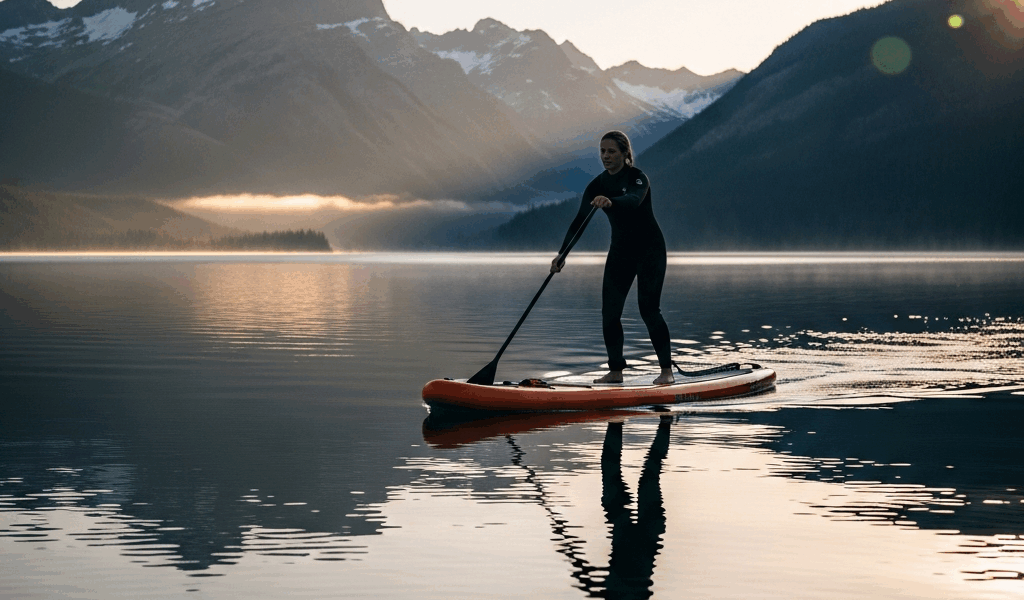
Spring is the best season for paddleboarding. The crowds haven’t arrived yet, water temperatures are rising, and the light has that soft quality that makes everything look better from a board. Whether you’re looking for flatwater calm or something with a little more adventure, here are spots worth visiting this spring.
Lake Tahoe, California/Nevada
Tahoe in spring is a different world from the summer circus. The water is cold — you’ll want a wetsuit or at least a good drysuit — but the clarity is at its peak. The lake’s famous visibility, which can exceed 70 feet, is best before summer boat traffic stirs up sediment. Paddle along the east shore near Sand Harbor in the early morning and you’ll see boulders on the bottom that look close enough to touch but are actually thirty feet down.
The snow-capped mountains surrounding the lake add a visual backdrop that’s hard to beat. Parking is easy in April and May. By July, you’ll wait an hour for a spot at popular launches.
Willamette River, Portland, Oregon
Portland’s stretch of the Willamette has become one of the best urban paddleboarding spots in the country. Launch from the Eastbank Esplanade or Sellwood Riverfront Park and paddle with the city skyline on one side and tree-lined banks on the other. The river current is mild through the downtown section, making it manageable for intermediate paddlers.
Spring brings higher water levels from snowmelt, which actually helps by covering some of the rocky shallow spots that are annoying in late summer. Just stay aware of the current — it’s stronger than it looks, and paddling upstream requires real effort. Plan your route so you paddle upstream first and cruise back with the flow.
Biscayne Bay, Miami, Florida
If you want warm water in spring, South Florida delivers. Biscayne Bay’s shallow, clear waters are ideal for SUP, and spring is the sweet spot before summer thunderstorms become a daily occurrence. The area around Key Biscayne and the Stiltsville houses offers a surreal paddling experience — you’re gliding over seagrass flats with historic houses on stilts rising out of the water around you.
Manatees are active in the bay during spring. Paddling quietly and spotting a manatee cruising beneath your board is one of those wildlife encounters you don’t forget. Keep your distance and don’t chase them, but they’re often curious enough to come to you.
Lake Powell, Utah/Arizona
Lake Powell’s red rock canyons from a paddleboard hit differently than from a motorboat. The silence is the thing — no engine noise, just your paddle and the occasional echo off the sandstone walls. Spring water levels are typically at their highest, which opens up side canyons that are too shallow to access later in the year.
Paddle into Antelope Canyon or one of the dozens of smaller slot canyons and you’ll find yourself in a narrow corridor of swirling red and orange rock with water reflecting the colors back at you. Bring a dry bag for your phone and take photos, because nobody will believe the colors are real without proof.
Boundary Waters, Minnesota
This one’s for the adventurous paddler. The Boundary Waters Canoe Area Wilderness along the Minnesota-Canada border is traditionally canoe territory, but SUP has found a foothold here. Spring brings the ice-out, and by mid-May most lakes are clear and paddleable. The water is cold enough to demand respect — a PFD is non-negotiable — but the solitude is unmatched.
You can paddle for hours without seeing another person. Loons call across the water in the evening. The boreal forest lines every shore. It’s paddleboarding stripped down to its most essential form: you, the board, and wilderness that stretches to the horizon.
Gear Check Before You Go
Spring paddling means variable conditions. Bring a leash — always — and wear a PFD. Water temperatures are lower than air temperatures suggest, and a fall into 55-degree water without flotation can turn serious fast. A lightweight paddle jacket blocks wind and spray without overheating you. And sunscreen. Spring sun reflects off water just as aggressively as summer sun, and you’ll burn before you realize it.

Stay in the loop
Get the latest paddleboard spots updates delivered to your inbox.