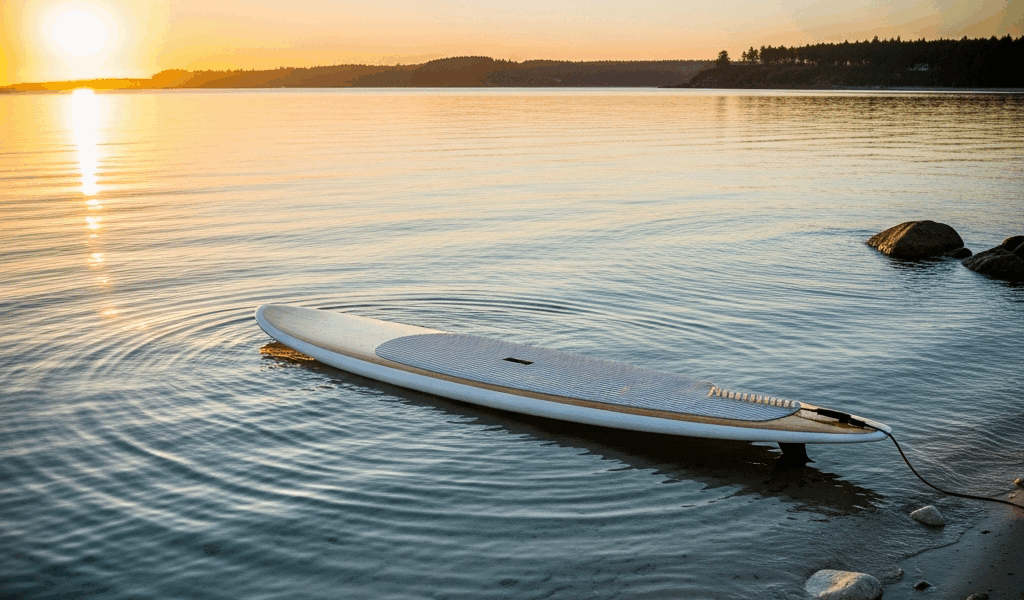
What Makes a Great SUP Beach — Wind Protection Matters More Than You’d Think
Finding good paddle boarding spots has gotten complicated with all the “hidden gem” content flying around. Every travel blog has a listicle. Every influencer has a reel filmed at golden hour on glass-flat water that looks nothing like the actual conditions you’ll encounter at 10 AM on a Saturday. As someone who’s spent five years hunting paddle boarding spots across the continental US, I learned everything there is to know about what separates a genuinely good SUP beach from a photogenic waste of a morning. Today, I will share it all with you.
The real criteria have almost nothing to do with scenery. Turquoise water and white sand are irrelevant if a 15-knot wind is shoving you sideways before breakfast. Wind protection is non-negotiable. So is genuinely flat water — not “relatively calm” flat, but dead, glass-flat. Entry points matter too. You’re standing on an 11-foot board. Rocky approaches and surprise currents aren’t charming obstacles. They’re trip-enders.
Probably should have opened with this next part, honestly. My first major SUP mistake happened at a California beach that looked flawless in photos. Pulled in at 9 AM, parked a quarter-mile from the sand, and spent forty minutes fighting driftwood and a steep drop-off just to reach the water. By the time I was actually paddling, the morning calm was already gone. Now I evaluate every spot the same way: Can I park within 100 feet of beach access? Is the entry gradual? Does the surrounding geography kill the wind before it reaches me? If any answer is no, I keep driving.
Paddle boarding isn’t surfing. You’re not hunting swell. You want stillness — the kind where your stroke actually moves the board forward in a straight, predictable line. That realization changes your entire site selection strategy.
Wind Protection — The One Thing That Actually Determines Your Day
Wind is the silent killer of SUP sessions. A 15-knot breeze transforms a fun morning into exhausting, demoralizing work. Protected bays, coves ringed by headlands, and inland lakes naturally shelter you from the gusts that wreck exposed ocean beaches before most people have finished their coffee.
What you’re looking for is geography that physically blocks prevailing winds. In the Pacific Northwest, islands create wind shadows that are remarkably effective. In Florida, mangrove-lined bays stay calm long after open water turns choppy. In mountain lakes, surrounding peaks suppress air movement until late morning — sometimes later. That’s what makes geography-dependent site selection endearing to us SUP paddlers. Nature does most of the work when you pick correctly.
Flatwater Clarity — Why Visibility Matters
But what is “good visibility” for SUP? In essence, it’s being able to see at least six feet down through the water column. But it’s much more than that. When you’re standing elevated on a board, visibility tells you about depth, submerged obstacles, and safety margins. Tannic water from freshwater sources isn’t inherently a problem. Zero-visibility murk in a tidal bay absolutely is. Aim for six feet minimum. Twenty or more is ideal — and possible at several spots on this list.
Entry and Exit Points — The Overlooked Essential
Sand beaches with gradual drop-offs beat rocky shores every single time. You need enough space to set your board parallel to shore, step one foot in ankle-deep water, and find your balance before committing. Steep entries, slippery rocks, surprise depth changes — all of these burn energy and confidence before your session even begins. Don’t make my mistake of dismissing this factor because a spot looks beautiful in photos.
Parking Proximity — This Is More Important Than You Think
A 200-meter carry with a 25-pound board and a paddle gets old after the first trip. The best SUP beaches have lots within 100 feet of sand access. I’ve skipped legitimately good paddle spots purely because the parking situation was a logistical nightmare. That’s not laziness — that’s experience telling you the session will start frustrated and go downhill from there. So, without further ado, let’s dive in.
Top 10 SUP Beaches by Region — Where to Actually Go
Pacific Northwest — San Juan Islands and Coastal Washington
The San Juan Islands, reachable via ferry from Anacortes or Friday Harbor in Washington, offer some of the most reliably protected paddling water in the country. Orcas Island’s East Sound and San Juan Island’s Snug Harbor stay remarkably calm because surrounding geology kills Pacific swells long before they arrive. It’s almost eerie how flat it gets.
Wind typically doesn’t build until late morning here. Arrive by sunrise and you get a solid two-to-three-hour window of glassy conditions — sometimes longer. June through August is most reliable. The main Anacortes ferry lot holds 400-plus vehicles, and public beach accesses nearby are well-marked and close to the water.
Water clarity in June sits around 25 to 30 feet. By September it drops slightly but remains more than adequate. Water temperature ranges from 48°F in winter to maybe 58°F in late summer — cold enough that neoprene booties are worth the $30 investment even during peak season. I’m apparently cold-natured, and the Glacier Glove 3mm booties work for me while basic neoprene socks never did.
California — Santa Cruz and Monterey Bay
The Capitola area, roughly seven miles east of downtown Santa Cruz, delivers consistent flatwater in a sheltered cove that the outer headlands protect surprisingly well. Stillwater Cove near Carmel runs glass-flat roughly 300 days a year. Kelp forests add visual interest and do nothing to interfere with paddling — they actually dampen chop.
Visibility runs 20 to 35 feet. Parking at Capitola Village beach costs $5 daily or $25 monthly — the monthly pass pays off fast if you’re a regular. Arrive before 8 AM on weekends. The lot fills by 9:30, sometimes earlier in July.
Wind patterns here are unusually predictable: glassy until around 9 AM, manageable light winds until 2 PM, then increasing noticeably after 3. Summer water temperature stays near 60°F. Winter drops to 52°F but a 3mm wetsuit handles it without drama.
Atlantic Coast — Key West and Outer Banks
Key West’s Smathers Beach faces the protected bay side, shielded from Atlantic swell by the island’s own mass. The shallow flats extending from shore stay under four feet for roughly 300 yards out — ideal for beginners who want to build confidence without worrying about depth.
Parking near Smathers costs $5 daily in the official lot. Water temperature runs 75 to 85°F year-round. Visibility in the shallows hits 20-plus feet. The island’s geography blocks northeast trade winds effectively enough that you can often paddle well into mid-morning without fighting chop.
Roanoke Island Sound near Manteo in the Outer Banks provides the sound-side protection that the Atlantic-facing beaches absolutely cannot offer. By mid-morning, ocean-facing spots turn ugly. Sound conditions stay workable. Summer water reaches 75°F; winter drops to 48°F. September through November is the sweet spot — fewer storms, predictable patterns, almost no crowds.
Gulf Coast — Destin and South Padre Island
Destin’s East Pass area gives you protected bay paddling with a short carry from parking. Crab Island works as a staging point for longer excursions into sheltered water. Sandbars sit in the three-to-six-foot range throughout the area. Parking at Crystal Beach costs $10 daily. Water temperature runs 72°F in winter, 84°F in summer. That’s what makes Gulf Coast paddling endearing to us cold-weather refugees — you can paddle year-round without a wetsuit for most of the calendar.
Visibility drops in summer from agricultural runoff and plankton blooms but stays adequate for navigation. The consistency advantage here is real: Destin offers paddleable conditions 250-plus days annually. South Padre Island’s Laguna Madre side — accessed via entrances near Port Isabel — stays protected from Gulf swells. Shallow water extends five-plus miles from shore in some sections. Parking is free at the Gulf Coast Birding and Nature Center. Water temperature ranges from 55°F in January to 86°F in August. Wind patterns favor May through July most reliably.
Mountain Lakes — Lake Tahoe and Flathead Lake
Lake Tahoe’s east shore coves, particularly Sand Harbor and Zephyr Cove near South Lake Tahoe, offer some of the clearest paddling water in the world. Visibility reaches 60-plus feet due to the lake’s oligotrophic properties — extremely low nutrient levels that keep the water almost disturbingly transparent.
Parking at Sand Harbor costs $12 daily. Water temperature sits around 50°F in summer, dropping to 40°F by fall. Paddleable window runs May through October, with September and early October delivering the most stable conditions and zero crowds. Afternoons get wind-whipped — consistently and without mercy. Morning sessions before 10 AM are the move. The lake sits at 6,224 feet elevation, so weather shifts faster than you’d expect. Early starts aren’t optional here.
Flathead Lake in Montana near Bigfork provides similar protection with slightly warmer water — 55 to 60°F in summer — and parking that’s generally more accessible. Both lakes reward early risers and punish anyone who shows up at noon expecting flatwater.
Great Lakes — Sleeping Bear Dunes and Isle Royale
Sleeping Bear Dunes’ protected coves along Lake Michigan’s eastern shore deliver reliable flatwater, particularly Empire Beach just south of the dunes, where surrounding geography creates a natural wind shadow. Summer plankton blooms drop visibility to 8 to 12 feet. Come back in September and you’re looking at 25 to 30 feet. Same lake, completely different experience.
Parking at Empire Beach runs $15 daily. Water temperature stays cold year-round — 45 to 55°F even in summer, so a 3mm to 5mm wetsuit isn’t optional, it’s mandatory. Best conditions fall between May and September, with peak stability in June and again in September.
Isle Royale’s sheltered bays offer dramatic backcountry scenery plus genuine flatwater. Getting there requires advance planning — the island is accessible only by ferry from Michigan’s Upper Peninsula, and crossings book out. The effort is worth it for paddlers who want solitude and geological interest in equal measure. That was one of the more memorable mornings I’ve had on a board. Period.
Best Time to Paddle at Each Spot — Seasonal Timing Shifts Everything
The Universal Rule — Early Morning Always Wins
Regardless of geography, season, or spot reputation — paddling before 9 AM delivers superior conditions. Full stop. As the sun warms water and shoreline at different rates, pressure differentials build and wind follows. Early morning sessions put you on glassy water. Sessions starting at 10 AM or later mean fighting chop that wasn’t there an hour before.
I learned this in Destin one summer. Paddled at 10 AM on what the forecast called a calm day. Dealt with 12-knot winds for two hours. Same beach, same conditions on paper, two hours earlier would have been perfect. Now I set a 5:30 AM alarm without negotiating with myself about it.
Seasonal Considerations by Region
Pacific Northwest: June through August brings warmest water and longest daylight. Wind stays manageable through mid-August, then builds. September and October see fewer tourists and stable patterns — honestly underrated months. Winter is cold and wet but protected bays stay paddleable for anyone with the right wetsuit.
California: Viable year-round. Fall — September through November — delivers the most consistent flatwater. Summer crowds are intense at popular spots. Winter storms roll through occasionally but also produce the clearest water of the year.
Atlantic: Fall and spring are ideal. September through November, April through May. Summer is warm but afternoon thunderstorm risk is real and the humidity is punishing. Winter water temps drop below 50°F, which requires serious neoprene commitment.
Gulf Coast: Spring — April and May — and fall — October and November — hit the sweet spot. Summer water is warm but air temperatures hit 95°F-plus onshore. Occasional winter cold fronts bring rough, unpaddleable conditions with minimal warning.
Mountain Lakes: Late May through September is your window. Morning sessions only — afternoons belong to the wind. October offers spectacular water clarity and zero crowds, but temperatures drop to 40 to 45°F. Dress accordingly or stay home.
Tide Patterns for Ocean Spots
Ocean paddling requires tide awareness — non-negotiable. Slack water, the brief period around high or low tide when current drops to nearly nothing, offers the easiest conditions. Incoming tides at protected beaches push you gently toward shore. Outgoing tides at exposed spots push you somewhere you didn’t plan to go.
Key West and South Padre Island see minimal tidal range — one to two feet — so timing matters less there. Outer Banks and San Juan Islands see three-to-six-foot ranges. At those spots, tide timing is as important as wind timing. NOAA’s tide prediction tool, searchable by specific launch location, is accurate and free. Use it the night before every ocean session.
What to Bring for a Beach SUP Day — Practical Packing List
Non-Negotiable Gear
Your board — an 11-foot all-around works for roughly 90% of paddlers in 90% of conditions — a paddle sized to your height, and a US Coast Guard-approved personal flotation device. No exceptions on the PFD. It’s legally required in most states and it’s the thing that keeps you alive if something unexpected happens 400 yards from shore.
A coiled ankle leash connects you to your board if you fall. They run $20 to $40 depending on build quality. Dakine and Creatures of Leisure both make leashes that last three to five years with regular use. I’m apparently hard on gear and the Dakine Coiled SUP Leash has held up while two cheaper options snapped within a season.
Protection and Hydration
SPF 50-plus sunscreen applied 15 minutes before you hit the water. Reapply every 90 minutes — more often if you’re sweating. Water reflects UV at angles your face and shoulders aren’t used to. I got burned through a thin rashguard during my first summer paddling because I underestimated how much the reflection angle amplifies exposure. Don’t make my mistake.
Bring one to two liters of water or a sports drink. Paddling is dehydrating work even on cool days, and thirst catches you by surprise when you’re not getting splashed with seawater. A 32-ounce Nalgene clips to most deck bags without hassle. Hydration packs work too — probably better for longer sessions over two hours.
Practical Additions
A dry bag in the $25 to $60 range protects your phone, keys, and any cash. Waterproof phone cases work if you need regular photo access mid-paddle. A basic microfiber towel stuffed in your car saves the post-session scramble.
Neoprene booties — $25 to $50 — protect your feet from rocks and cold entries. Rashguards in the $30 to $60 range handle sun and chafing on longer sessions. Neither is critical for warm-water summer paddling, but both solve real discomfort problems once you’ve experienced them. A board bag in the $100 to $200 range protects against UV damage and roof-rack dings on transport days. Rope and padding work in a pinch, but board bags make loading genuinely easier.
Pre-Departure Checks
Run through this before every session. Inspect the board for soft spots or open dings. Check the paddle shaft for cracks at the collar. Test your leash attachment at both ends. Confirm your PFD fits without riding up when your arms are raised — adjust straps until it doesn’t. Set a return-time alarm so you don’t lose track of conditions changing.
Tell someone where you’re launching and when you expect to be back. This sounds excessive until it isn’t. I’ve been nearby when search and rescue responded to two separate paddler situations in five years — both resolved quickly because someone onshore knew the paddler’s planned location and return time. That information is the whole thing. Write it on a note if you have to.
The best paddle boarding beaches in the US aren’t the prettiest ones. They’re the ones where conditions actually cooperate — where wind stays manageable, water stays flat, and entry doesn’t burn your energy before you’ve paddled a single stroke. Pick your spot based on conditions, show up before the wind does, pack what you actually need, and the paddling day you’ve been planning becomes the one you actually get.

Stay in the loop
Get the latest paddleboard spots updates delivered to your inbox.