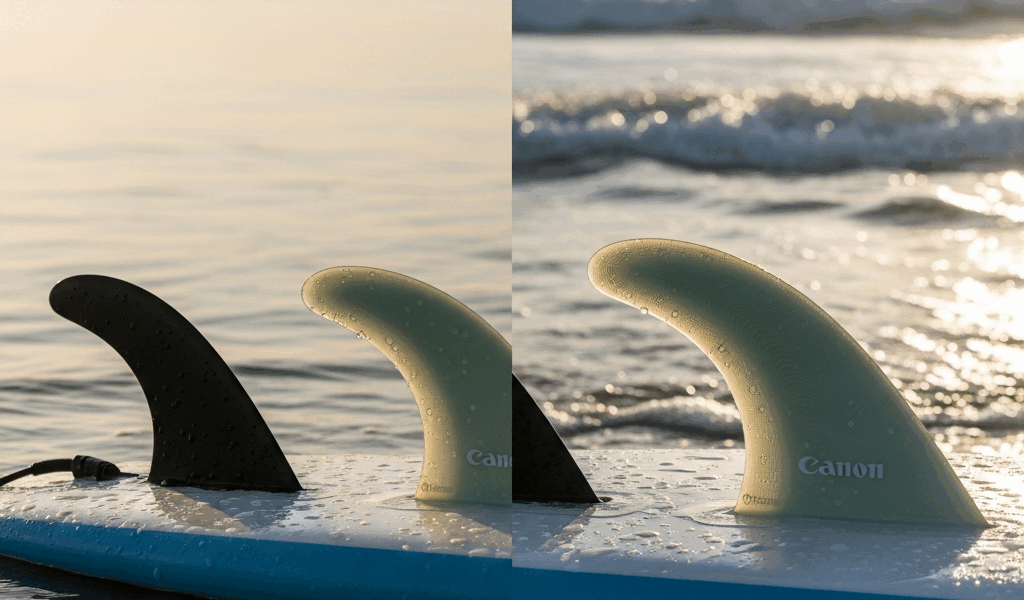
Why Your Fin Setup Actually Matters
SUP fin setups have gotten complicated with all the conflicting advice flying around. Single fin, thruster, 2+1 — nobody agrees, and most paddlers just ignore the whole conversation and use whatever came in the box. I was one of them for an embarrassingly long time.
As someone who has paddled everything from glassy Connecticut lakes to choppy Atlantic surf, I learned everything there is to know about how fin configuration actually changes the way a board behaves. Today, I will share it all with you.
Here’s the short version: fins control three things. Tracking — meaning how straight your board goes. Stability — how planted it feels underfoot. And maneuverability — how easily you pivot and turn. Get the wrong setup for your water and you’ll spend two hours fighting your equipment instead of actually paddling. Get it right and the board suddenly feels like it’s working with you.
So, without further ado, let’s dive in.
The Three Common Fin Configs Explained
Probably should have opened with this section, honestly. Most people don’t know what these configurations actually do — they just know their board “feels weird.” Understanding what each setup does is the real foundation here.
Single Fin — Center Box Only
One large fin, dead center. It tracks like a railroad track. There’s minimal drag because you’re only pushing one blade through the water — everything else just follows. A single fin is your workhorse for touring, distance paddling, flatwater cruising, anything where you’re mostly going in one direction for a sustained period. Simple. Effective. Underrated.
Thruster — Three Fins
But what is a thruster, exactly? In essence, it’s a center fin plus two smaller side fins. But it’s much more than that. The center handles tracking. The side fins — sometimes called “wings” — give you edge control. You can carve sharper turns without the board locking up on you. Thrusters are fast to pivot. That’s what makes thrusters endearing to us surf-oriented paddlers.
The catch: three fins create real drag. I’m apparently sensitive to this, and paddling a thruster works fine for me in surf while using one on flatwater never feels right. You’ll notice it in your forearms after about ninety minutes of open paddling. Don’t make my mistake and use a thruster on a calm lake just because it looks aggressive.
2+1 — Hybrid Setup
One larger center fin plus two very small side fins. It’s designed as a compromise — better tracking than a pure thruster because the center fin is doing more of the work, more maneuverability than a single fin because the sides still bite. Honest assessment? The 2+1 is a political solution. It doesn’t track as cleanly as a dedicated single-fin setup. It doesn’t turn as sharply as a proper thruster. But for recreational paddlers who own one board and paddle everything from lakes to mild ocean chop, it’s a reasonable middle ground.
When to Remove Fins Entirely
If your board has removable side fins and you’re heading out on flatwater or dead-calm conditions, pull them out. Seriously — just remove them. Two fewer fins means two fewer blades dragging through the water. I tested this on a 10’6″ recreational iSUP on a lake in early September and the difference in effort was immediate and noticeable. The board still tracked fine on the center fin alone. Those side bites were doing nothing except costing me energy.
Best Fin Setup for Flatwater and Lakes
Single large center fin. No exceptions, no debate.
Flatwater is the easiest paddling environment and it makes the fewest demands on your fin configuration. You aren’t reacting to chop. Swells aren’t rotating your tail sideways. Wind might push you around occasionally, but you’re making wide, deliberate turns — not split-second pivots. Side fins in this environment are pure drag. They make the board feel sluggish and heavy. A solid single-fin center setup will outtrack a thruster on calm water every single time.
Size actually matters here. A center fin for flatwater should be deeper than most people expect — somewhere in the 7 to 9 inch range depending on board length and your body weight. More depth equals more lateral resistance equals straighter tracking. A small fin in a large box is like wearing loose boots. Everything wanders.
Now, the wrinkle: shallow water. If you’re regularly paddling in anything under three feet — tidal flats, rivers, shallow lake edges — a rigid fiberglass fin will snap the moment it finds a sandbar. I broke a center fin on a sandbar off the Connecticut coast in 2019. That was a $300 fin box repair — for a fin that cost $45 to replace with a flexible rubber version. Rubber fins run around $25 to $35, flex instead of snapping, and track nearly as well in shallow conditions. Switch before you find out the hard way.
Best Fin Setup for Ocean and Surf
Ocean water is a completely different animal. Chop builds fast, swells roll through without warning, and your board gets shoved around constantly. A single fin that behaves beautifully on a lake will feel locked and twitchy in these conditions — like trying to steer a shopping cart with one frozen wheel.
Thruster or 2+1. Those side fins give you edge-to-edge control when you need it most. When a 2-foot swell pushes your tail sideways — and it will — the side fins bite the water and let you pivot back under the board without going swimming. In a proper thruster, the side fins also allow you to carve more aggressively through steep chop rather than getting bounced off it. That’s what makes the thruster endearing to us ocean paddlers.
The drag tradeoff is real. Your shoulders will know the difference after ninety minutes. Worth it. A single-fin setup in active ocean conditions will make every wave feel like a problem to survive instead of something to manage.
One note for inflatable SUP owners specifically: many inflatables ship with only a single center fin box — the drop-stitch construction doesn’t accommodate side fin inserts the way hardboards do. If your board came with one fin and no side boxes, that’s not a flaw. Most recreational ocean paddling is genuinely fine with a single large fin — 9 inches or deeper — as long as conditions aren’t extreme. Thrusters are overwhelmingly more common on epoxy hardboards for exactly this manufacturing reason.
Troubleshooting Common Fin Problems
Your board talks to you when something’s wrong. The problem is most paddlers blame themselves instead of checking the actual hardware.
Board Pulls Left or Right
The center fin is either loose in the box or it isn’t seated straight. Pull over, grab the fin, and wiggle it. If it moves at all, the fin screw is loose — tighten it with a flathead or the fin key that came with your board. A fin that’s even slightly off-center will drag consistently in one direction. This is probably the most common fin issue I see and it takes thirty seconds to fix.
No Straight-Line Tracking
Either the center fin is missing entirely — yes, this happens — or it’s too small for your board and your body weight. An undersized fin creates almost no lateral resistance. Upgrade to a deeper center fin, something in the 8 to 9 inch range for boards over 10’6″. Confirm the fin is actually locked in place before you write off your board as defective.
Fin Dragging Bottom in Shallow Water
Remove the side fins first if they’re removable. Then swap the center to a flexible rubber fin or a shallower profile — something in the 4 to 5 inch range. Rigid fiberglass fins in less than three feet of water aren’t a question of if they’ll break. It’s when. Rubber fins might be the best option here, as shallow paddling requires consistent bottom clearance. That is because even a brief scrape at paddling speed puts enormous lateral stress on the fin base.
Fin Whistling or Vibrating
Sand in the fin box or a loose fit. Rinse the box out thoroughly — flip the board over, run fresh water through, check for debris packed around the fin base. If the whistling continues after cleaning, the fin itself may be worn or warped, and the box might be damaged. A loose fin affects tracking immediately and usually gets worse over a session, not better. While you won’t need specialized tools for this, you will need a handful of minutes and a hose before your next paddle.
Your fins are working harder than you ever notice when things are going well. Treat them like the actual performance variable they are — not a fixed part of the board you accepted in the parking lot and forgot about. Match the setup to your water type and paddling stops feeling like something you have to push through.

Stay in the loop
Get the latest paddleboard spots updates delivered to your inbox.