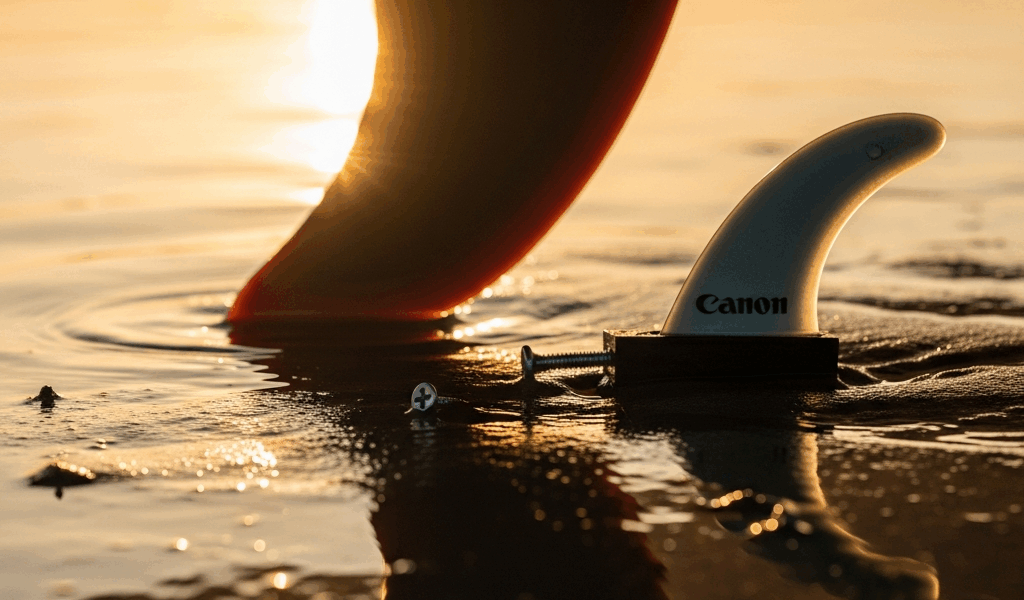
Why Fins Come Loose in the First Place
Paddle board fin problems have gotten complicated with all the conflicting advice flying around online. As someone who has lost a fin mid-session more times than I’d like to admit — standing in waist-deep water, cursing at a $900 board — I learned everything there is to know about why fins detach and how to actually stop it from happening. Today, I will share it all with you.
Here’s the thing most gear websites bury or skip entirely: fin detachment isn’t mysterious. It’s almost always preventable. But the fix depends entirely on which fin system your board uses. Get that wrong and you’ll spend twenty minutes solving the wrong problem. Don’t make my mistake.
Paddle boards use two main attachment systems. Hard boards and some mid-range inflatables use screw-in fins — sometimes called US box systems — where a metal plate sits recessed into the board and a thumbscrew or tool screw holds everything in place. Inflatables and budget boards typically use snap-in fins, also called click systems, where a plastic tab on the fin base locks into a vertical channel molded into the fin box.
Four root causes cover almost every fin loss you’ll encounter: a worn or broken snap tab, a loose or missing screw, a cracked fin box, or a fin that’s simply the wrong size for the box. Identify your system first. Everything flows from that one decision.
How to Tell Which Fin System You Have
Probably should have opened with this section, honestly.
Remove the fin. Actually look at it. That’s your answer — at least if you take thirty seconds to do it properly rather than guessing.
Snap-in fins have a rigid plastic tab molded into one edge of the fin base. Roughly the thickness of a credit card. Push down on it and it flexes slightly. The board’s fin box has a vertical slot running lengthwise, and when you slide the tab into that channel, a small plastic lip catches it with an audible click.
Screw-in fins look completely different. There’s a flat metal plate — usually aluminum or stainless steel — bonded to the base, with a threaded hole in the center. The board’s fin box is a recessed pocket with a threaded insert. You align the plate, drop in the screw by hand, and tighten it with a Phillips or flathead screwdriver. Sometimes the board ships with a dedicated tool for this. Sometimes it doesn’t. Fun.
But what is the correct identification method? In essence, it’s just looking at the fin base while it’s off the board. But it’s much more than that — knowing which system you have determines every step that follows.
Fixing a Snap-In Fin That Won’t Stay Locked
The snap tab is the weak link in click systems. Usually polycarbonate or ABS plastic. It wears out. That’s just reality.
First, you should inspect the tab closely — at least if you want to avoid making things significantly worse. Is it visibly cracked or split? If yes, replace the fin. A cracked tab won’t grip the channel properly, and forcing it will eventually crack the fin box itself. That’s a much bigger repair. Much worse.
If the tab looks intact but the fin still slides out, check for grit. Sand, salt, algae — any buildup in the channel prevents a proper seal. Pull the board out of the water, dry both the channel and the tab completely, wipe the channel with a dry cloth, then reinstall. Nine times out of ten, that’s the whole fix.
If the channel is clean, the tab looks solid, but the fin still won’t lock? The tab is worn smooth. The friction that creates the click is simply gone. Two options here. Temporary fix: wrap one thin layer of electrical tape around the tab — adds back some thickness and friction, buys you a few sessions before it wears away again. Permanent fix: buy a replacement fin. That’s what makes snap-in systems endearing to us budget-conscious paddlers — the fins are cheap enough to replace without crying.
Most snap-in fins are brand-specific. iROCKER fins don’t fit ISLE boards. ISLE fins don’t fit Nautical. I’m apparently an iROCKER person and their OEM replacement fins work for me while generic alternatives never quite click right. Check your board’s manual or the brand website for the exact model number before ordering anything. Replacement snap-in fins run $25 to $60 depending on brand — not nothing, but cheaper than board repair. You’re essentially getting a fresh plastic tab with a new fin attached. That’s the whole point.
Don’t try to force a worn fin back into the channel repeatedly. The flex eventually cracks the fin box itself, and then you’re in professional repair territory.
Fixing a Screw-In Fin That Keeps Falling Out
Loosened or missing screws are the most common issue with US box systems. Also the easiest to fix. So, without further ado, let’s dive in.
Tighten the screw. Hand-tight first, then a quarter turn with your screwdriver. Stop there. This isn’t an engine block bolt — gorilla-tightening strips the threads in the insert or warps the fin base. Finger-tight plus a quarter turn holds. That’s the whole technique.
If the screw is completely missing, you need a replacement. Most screw-in fins use a standard Phillips head stainless steel screw — usually 1/4″ or 5/16″ length. Hardware stores carry them for $1 to $3. Bring the fin along so you can match the thread size, or just measure the threaded hole before you go. Your board’s brand probably also sells replacement screw kits for around $10 to $15 and will ship one quickly. Either option works.
Here’s the rare scenario worth knowing about: you tighten the screw and it spins freely without catching. The threads in the fin box insert are stripped — the screw has nothing to grab. A stripped insert might be the best reason to contact your manufacturer immediately, as warranty claims require documentation. That is because some brands cover this fully while others don’t, and calling before you buy anything could save you real money. For hard boards, manufacturers can sometimes replace just the insert. For inflatables, a stripped insert often means replacing the entire fin box assembly — or the board itself, depending on where the damage spread.
When the Fin Box Itself Is the Problem
Sometimes the fin is fine. The screw is fine. The fin box is just damaged.
Signs to look for: visible cracks radiating outward from the box, gaps between the box and surrounding board material, sideways flex when you push the installed fin — at least any flex at all, because a properly installed fin shouldn’t move — or water seeping into an inflatable around the fin base.
For hard boards with epoxy fin boxes, small cracks are sometimes repairable. The board needs to be completely dry first. Clean out the crack, fill it with two-part epoxy resin, let it cure fully, then seal the area. DIY-able, but finicky. That was a $120 repair shop bill the one time I tried to rush it myself and failed. If you’re not confident, send it to a shop. Costs typically run $50 to $150 depending on damage extent.
For inflatables with a separating or cracked fin box — stop here. The fin box is part of the bonded PVC assembly, and safely repairing it means deflating the board, opening seams, and re-bonding materials. Professional work. Full stop. Contact the manufacturer about warranty coverage before spending a dollar on anything.
While you won’t need to file a formal legal claim, you will need a handful of things: photos of the damage, your purchase receipt, and a clear description of how the failure happened. If your board is still under warranty and the fin box failed during normal use, that’s a legitimate claim. Most brands will replace the board or cover repair costs — at least if you document everything clearly and contact them before attempting any repairs yourself.


Stay in the loop
Get the latest paddleboard spots updates delivered to your inbox.