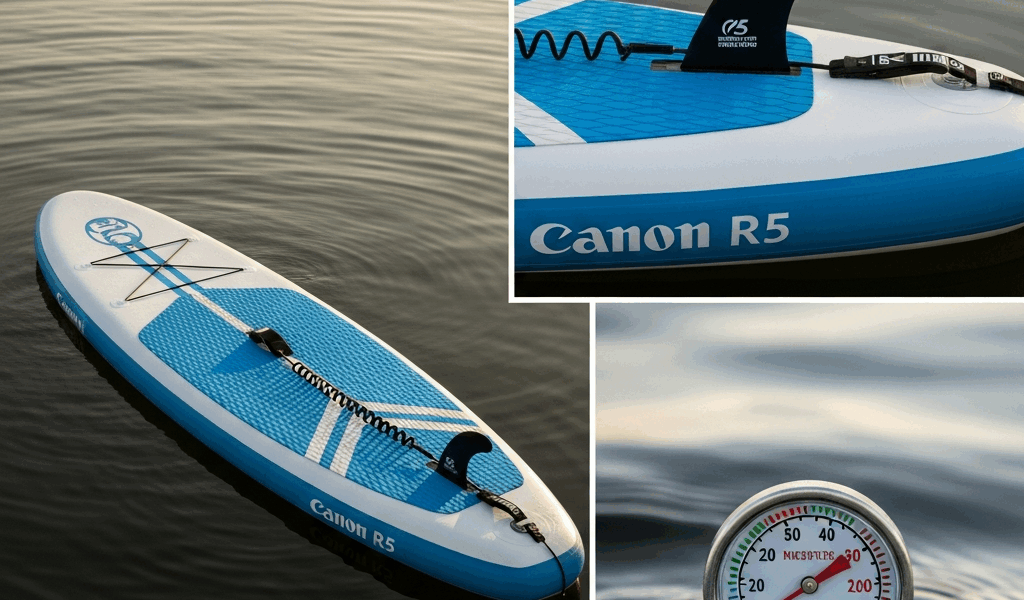
A paddle board usually feels wobbly because of conditions, incorrect setup, excess or poorly placed load, board design, or stance—not because the rider simply has “bad balance.” Start with safety and water conditions, then verify the manufacturer’s inflation pressure, fin installation, damage, load limit, and cargo placement. Only after those checks should you adjust technique or consider a wider board.
If the board suddenly becomes less stable, kneel or sit, stay with the board when safe, and return to shore. A new wobble can indicate lost pressure, a loose fin, water inside a hard board, shifted cargo, increasing wind, current, fatigue, or equipment damage.
Quick diagnostic
| What you notice | Likely causes | First check |
|---|---|---|
| Inflatable board bends or “tacos” under load | Low pressure, overload, leak, or unsuitable construction | Gauge reading and printed manufacturer range |
| Board rolls side to side but stays straight | Narrow outline, high/thick rails, high center of gravity, stiff stance | Load, centered stance, calm-water test |
| Board yaws or spins after each stroke | Fin missing/loose, uneven stroke, standing off-center | Correct fin installation and stroke path |
| Stable alone but unstable with dog, child, or cargo | Overload or moving/off-center weight | Manufacturer load limit and distribution |
| Fine near shore but unstable farther out | Wind, chop, wakes, current, or reflected waves | Return to protected water; reassess conditions |
| One side sits lower | Off-center stance/cargo, water ingress, deformation, damage | Unload and inspect ashore |
1. Treat changing conditions as the first suspect
Wind, chop, boat wakes, current, rebound from seawalls, and shallow-water wave patterns can make a stable board feel completely different. Wind can also push a standing paddler and board away from shore faster than expected.
Do not use rough water as the place to troubleshoot equipment or learn balance. Move to protected, calm water with a safe launch, stay close to shore, and paddle with another person. Check the forecast, local hazards, vessel traffic, water temperature, and an exit route before launching.
If conditions are deteriorating, kneel to lower wind exposure and center of gravity, then return by the safest route. Do not continue offshore to “practice through it.” Fatigue makes remounting and judgment worse.
2. Use the correct safety equipment
Wear a properly fitted personal flotation device appropriate to the activity and applicable law. Carry legally required signaling equipment. A leash is not a substitute for a PFD.
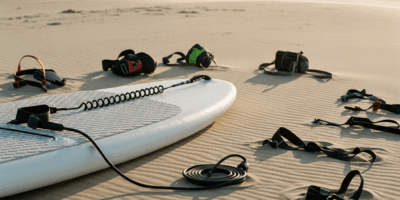
Leash selection depends on the environment. An ankle or calf leash that helps retain a board on open flat water can snag in current, rivers, whitewater, docks, or obstructions. Entrapment under moving-water load can be fatal. Obtain discipline-specific instruction and use the release system recommended for that water type—one you can actually reach and release under load. When local experts advise against a leash for a specific hazard, follow that guidance.
Cold water can cause rapid loss of breathing and movement even on a warm day. Dress for immersion, not only air temperature, and review National Weather Service cold-water guidance.
3. Inflate an iSUP to its own specification
There is no universal 12–15 PSI target. Inflatable boards vary. Use the pressure range printed by the manufacturer on the board, valve area, manual, or current product documentation, and use a compatible working gauge.
A thumb “squeeze test” cannot measure safe operating pressure. Drop-stitch boards can feel firm well below target, and temperature changes alter pressure. Do not exceed the stated maximum to chase more stiffness; overinflation can damage seams or the structure, especially as a board heats in direct sun.
If the pump gauge does not move at first, the board may still be at very low pressure. If it never reads or the reading seems implausible, inspect the hose, seals, gauge, pump mode, and valve connection. Do not substitute an unregulated high-flow compressor.
4. Check for pressure loss or structural trouble
An iSUP that becomes softer during one session may have a loose valve, puncture, seam leak, temperature-related pressure change, or valve contamination. Return ashore before testing it. Use the manufacturer’s leak-detection and valve-service instructions; do not tighten a valve while the board is fully pressurized unless expressly directed.
A hard board that takes on water, develops a soft spot, cracks, or sits unevenly should be removed from service and inspected. Water inside a damaged board changes weight and balance and can worsen internal damage. Our water-ingress guide explains the immediate steps.
5. Verify the fin—but do not expect it to create primary stability
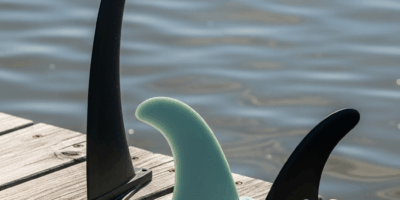
A missing, loose, backward, damaged, or partially seated center fin can make a board yaw, wander, or feel unpredictable. Install the correct fin fully in its box and secure it as the manufacturer specifies. Check that it has not struck bottom or collected weeds.
Fins primarily affect tracking, yaw resistance, and turning behavior. Adding side fins does not automatically transform a narrow or overloaded board into a stable platform. A thruster arrangement can be useful in surf and may change handling, but it is not a universal beginner-stability upgrade. Use only configurations the board supports.
6. Check load limit and weight distribution
Published load limits are not all defined the same way. Some describe a maximum before severe performance loss, while others are practical recommended loads. Include the paddler, clothing, water, cooler, dry bags, fishing gear, child, dog, and anything attached to the deck.
A board can be technically below a maximum yet still paddle poorly. Excess load lowers freeboard, increases flex or drag, and makes small shifts more noticeable. Put heavy cargo low and near the board’s designed center, secure it, and keep it balanced left to right.
Moving passengers and dogs create dynamic loads. Start seated or kneeling in calm shallow water, add one variable at a time, and never rely on a child or pet to stay still as the only stability plan.
7. Stand at the board’s balance point
On many all-around boards, the carry handle roughly marks the intended standing area, but verify the design. Place feet parallel on either side of the centerline, not on one rail. Start around hip- to shoulder-width and adjust within the usable deck rather than following one mandatory measurement.
- Keep knees and ankles soft rather than locked.
- Stand tall through the torso without crouching rigidly.
- Look toward the horizon, not constantly at your feet.
- Keep the paddle ready for a light brace or controlled stroke.
- Move one foot at a time and keep weight changes smooth.
A wider stance is not always better. Standing close to the rails can amplify side-to-side input and makes accidental rail loading easier.
8. Use the paddle as active support
A blade in the water can provide useful support, but dragging it passively is not literally a third fixed contact point. Learn a light brace, forward stroke, and recovery from a qualified instructor. Pushing down hard on a poorly oriented blade can make it dive or slip and worsen the fall.
Use shorter, controlled strokes while learning. Plant the blade before applying power, keep the shaft reasonably vertical for forward travel, and avoid reaching so far that shoulders and hips move beyond the stable base.
9. Board width is only one part of stability
More width often increases initial stability, but “anything under 30 inches is an expert board” is not a reliable rule. Stability also depends on:
- outline and where the width is carried;
- length, thickness, rocker, rail shape, and hull shape;
- volume and stiffness under the actual load;
- deck height above the water;
- fin and tail design;
- rider height, mobility, and stance;
- cargo placement and water conditions.
A very thick inflatable board may sit high and feel corky to a lighter rider despite generous width. A narrower hard board with a favorable hull and low standing area may feel composed. Use our board-width guide as one input, then demo the loaded board in safe conditions.
10. Distinguish initial from secondary stability
Initial stability is how steady the board feels when nearly level. Secondary stability is how progressively it supports you as it rolls toward a rail. A flat, wide board can feel steady at rest but transition abruptly at the edge; another hull may feel lively at first but support controlled edging.
Beginners usually value strong initial stability. Touring and moving-water designs may balance other characteristics. This is another reason one width number cannot predict the entire experience.
A safe ten-minute test
- Choose calm, protected water with a safe bottom and exit.
- Wear the correct PFD and environment-appropriate retention system.
- Inspect the board, valve, pressure, fin, paddle, and damage ashore.
- Remove cargo and test the board within its rated load.
- Start kneeling at the balance point.
- Stand one foot at a time while another paddler remains nearby.
- Use soft knees, eyes forward, and short controlled strokes.
- If stable unloaded, add secured cargo one item at a time.
- If instability returns with conditions or load, stop and identify that change.
- If the board flexes, leaks, takes on water, deforms, or sits asymmetrically, remove it from service.
When technique practice will help
If the correctly set-up board is stable while kneeling and no equipment issue appears, a beginner lesson can help with standing, bracing, falling away from the board, remounting, turning, and reading wind. Practice falling and remounting only in a controlled environment appropriate to water depth, temperature, traffic, and local instruction.
Do not practice near rocks, docks, swimmers, boats, current, offshore wind, or cold water without the skills and safety system those hazards require.
Bottom line
Check conditions and safety first. Then use a gauge and the board’s own pressure specification, inspect the fin and structure, calculate total load, center the weight, and test stance in calm protected water. Width can help, but it is not the only stability variable, and side fins cannot compensate for overload, low pressure, bad conditions, or the wrong board.
If the wobble appeared suddenly or the board flexes, leaks, deforms, or takes on water, stop paddling and inspect it ashore rather than trying to fix the problem with technique.

Stay in the loop
Get the latest paddleboard spots updates delivered to your inbox.